Open Hours
Mon - Fri:
8.00 am - 8.00 pm
Saturday:
9.00am - 6.00 pm
Sunday:
9.00am - 6.00 pm

Category: Heavy-Duty Truck Maintenance

How Often Does Your Fleet Actually Need Semi Truck Repair? A Maintenance Schedule Guide

If you run even a small fleet out of St. George, you already know that a truck sitting in the shop is a truck that isn’t making money. The frustrating part is that most of the semi truck repair work that sidelines a rig didn’t have to happen on that particular day. It was building for weeks, sometimes months, and a maintenance schedule would have caught it before it turned into a roadside breakdown or a failed DOT inspection.

The question fleet owners and owner-operators ask most often isn’t “does my truck need maintenance.” It’s “how often, really?” The honest answer depends on your trucks, your routes, and how hard you’re running them. But there is a practical framework you can follow, and understanding it will save you money, downtime, and a fair amount of stress.

Why Maintenance Timing Matters More Than People Think

A lot of drivers wait until something feels wrong before bringing a truck in. That approach works fine for a while, right up until it doesn’t. Semi trucks put an enormous amount of stress on their components. Engines run for thousands of hours, brakes handle tens of thousands of pounds, and suspension systems absorb constant vibration and load shifts. Small problems in any of these systems don’t stay small.

A slipping serpentine belt, for example, is a five-minute fix if you catch it early. Ignore it and you’re looking at a stranded truck, a tow, and a missed delivery window. The same logic applies to brake wear, coolant condition, and dozens of other items that are cheap to address proactively and expensive to address reactively.

There’s also a compliance angle. FMCSA out-of-service criteria focus heavily on brakes, tires, steering components, and lighting. A truck that misses its maintenance intervals is far more likely to get pulled out of service during a roadside inspection, which costs you both the repair and the lost driving time. For fleets, an out-of-service violation also affects your CSA score, which can influence insurance rates and even which loads you’re offered.

Beyond compliance, there’s the simple economics of running a truck for a living. Every hour a truck spends broken down on the shoulder of I-15 instead of moving freight is an hour of lost revenue, plus towing costs, plus the price of the repair itself, which is almost always higher when it happens as an emergency than when it’s scheduled.

Daily and Weekly Checks: The Foundation

Before we get into mileage-based intervals, it’s worth being clear that a lot of semi truck repair issues get caught, or missed, at the pre-trip inspection stage, not in the shop.

Every shift, drivers should be checking:

  • Visual inspection for fluid leaks under the truck
  • Tire condition, tread depth, and inflation
  • Lights, turn signals, and reflectors
  • Brake function and air system pressure
  • Fluid levels: oil, coolant, washer fluid
  • Windshield condition and mirror adjustment

Weekly, someone with a bit more mechanical familiarity should look at:

  • Battery terminals and connections for corrosion
  • Belt and hose condition
  • Coolant condition, not just level
  • Oil quality and any signs of contamination
  • Horn, gauges, and dash warning lights

These checks don’t replace professional service, but they catch the kind of problems that turn into an emergency call if left alone for a month. They also create a paper trail. If a DOT officer asks for your DVIR history, a consistent record of daily and weekly checks shows a truck that’s being actively maintained, not just driven until something breaks.

Mileage-Based Maintenance: What to Expect and When

Every manufacturer publishes its own recommended intervals, and duty cycle matters a lot here. A truck running long-haul highway miles wears differently than one doing short, stop-and-start regional routes with heavier loads. That said, most fleets follow a tiered structure similar to this.

Every 15,000 miles (basic service):
Oil and filter change, chassis lubrication, fluid top-offs, belt and hose inspection, tire pressure and condition check, fuel-water separator drain, and a brake inspection.

Every 30,000 miles (intermediate service):
Everything from basic service, plus fuel filter replacement, air dryer inspection and service, coolant concentration check, and a more thorough suspension inspection covering bushings, shocks, and linkages.

Around 150,000 miles:
This is where bigger-ticket items start showing up on most trucks: DEF system service, differential oil replacement, and depending on the engine, the first valve adjustment. Air filter housing cleaning or replacement often falls in this window as well.

300,000 to 500,000 miles:
Fan and accessory drive belt replacement, coolant filter replacement, and transmission filter and fluid service typically land somewhere in this range, again depending heavily on the make and model. Some engines call for a DPF filter clean or bake around 250,000 to 400,000 miles.

750,000 miles:
A full coolant flush and replacement is common at this point for many engine platforms.

These numbers are general guidance, not a substitute for your owner’s manual. Peterbilt, Kenworth, Freightliner, and Volvo all have slightly different recommendations, and severe duty cycles, like mountain routes, extreme heat, or consistently heavy loads, call for tightening these intervals rather than stretching them. A truck that spends most of its life climbing grades outside St. George is working harder than one running flat highway miles, and its maintenance schedule should reflect that.
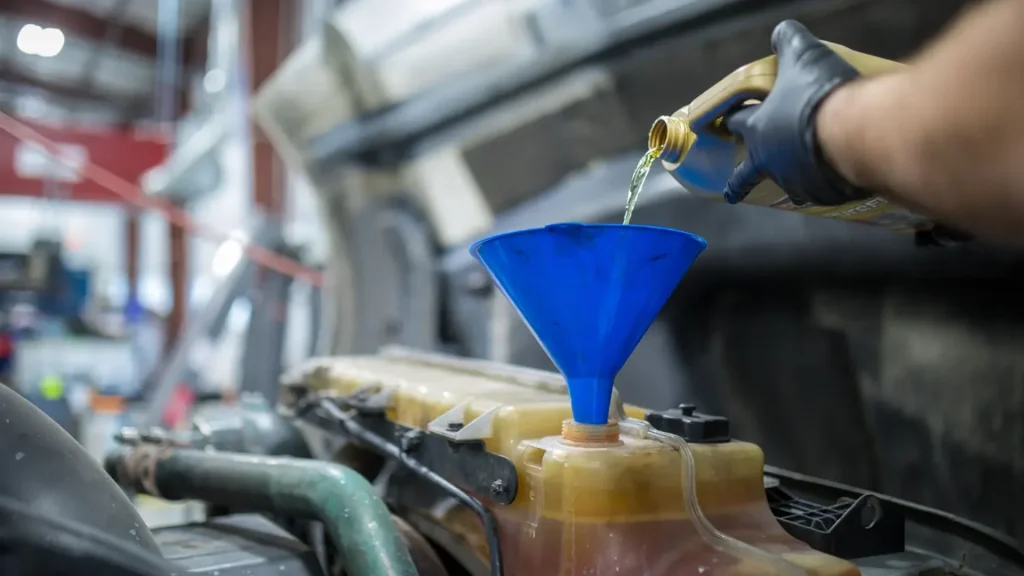
Mechanic changing the oil filter on a semi truck engine during routine maintenance - semi truck repair

Seasonal Considerations for Southern Utah

St. George’s climate adds its own wrinkle to a maintenance schedule. Summer heat is hard on cooling systems, batteries, and air conditioning. If you’re running routes through the desert in July and August, coolant condition and radiator performance deserve extra attention beyond the standard mileage interval. A cooling system that’s marginal in spring can fail outright once temperatures climb past 100 degrees, and an overheated engine on the highway is one of the more expensive ways a routine coolant service can turn into a major repair bill.

Heat also shortens battery life and accelerates tire wear, since higher pavement temperatures increase tire pressure and put more stress on the rubber. It’s worth checking tire pressure more frequently during the hottest months rather than relying solely on the mileage-based rotation schedule.

Winter is milder here than in a lot of the country, but the surrounding routes through higher elevation still bring cold snaps. Wiper blades, defrosters, and brake system moisture checks matter more during those months, and any driver running through mountain passes should have their ABS and drum brakes verified before winter weather sets in, since drum brakes can freeze in low temperatures if moisture has accumulated.

Signs Your Truck Needs Semi Truck Repair Sooner Than Scheduled

A mileage-based schedule is a good baseline, but it’s not the whole picture. Some symptoms mean a truck needs attention regardless of where it falls in the interval chart:

  • Unusual noises from the engine, transmission, or suspension
  • A noticeable drop in fuel economy
  • Dashboard warning lights, especially for the DEF or emissions systems
  • Uneven tire wear, which often points to alignment or suspension issues
  • Soft or spongy brake pedal feel, or the truck pulling to one side under braking
  • Fluid spots under the truck between scheduled services
  • Difficulty starting, especially in colder mornings
  • Vibration at highway speed that wasn’t there before

Any of these is worth a same-week visit rather than waiting for the next scheduled interval. Catching these early is almost always the difference between a repair and a breakdown, and it’s a lot easier to plan around a shop visit on your own schedule than to deal with a truck stranded on the shoulder waiting for a tow.
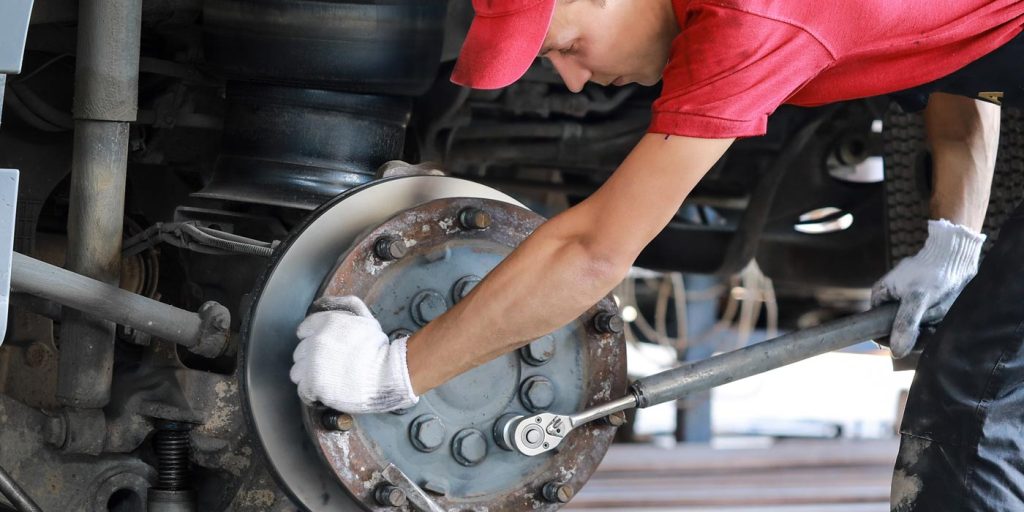
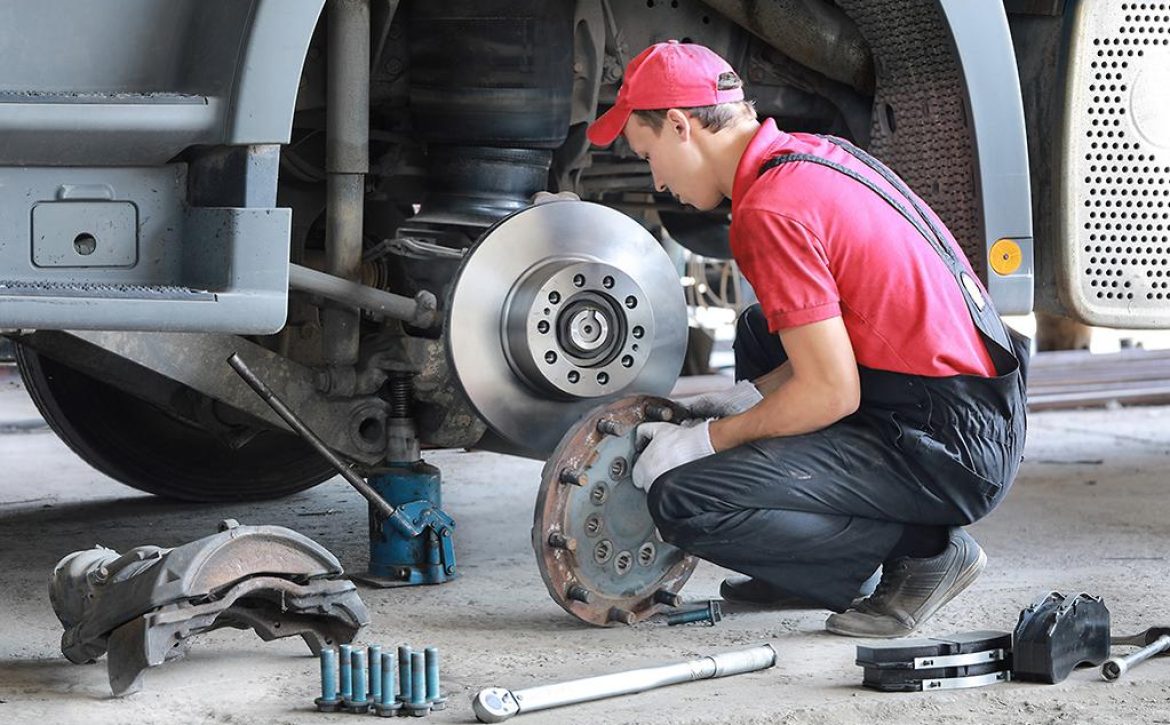
Technician inspecting a semi truck's brake components for wear

Why Preventive Maintenance Costs Less Than Reactive Repair

It’s worth putting real numbers behind this, even in general terms. A scheduled brake inspection and adjustment costs a fraction of what an emergency brake failure on the highway costs once you factor in towing, the repair itself, the missed delivery, and potential DOT violations. The same is true for engine cooling issues, which are cheap to catch as a coolant service and expensive once they turn into an overheated engine or, worse, a blown head gasket.

Fleets that document their maintenance consistently also tend to have an easier time during DOT audits and inspections, since a clean maintenance history demonstrates compliance and reduces the odds of a truck getting flagged during a roadside stop. Insurance carriers also look favorably on documented preventive maintenance programs, and in some cases it can affect your premiums.

There’s a psychological cost too. Reactive repair means unpredictable downtime, which makes it much harder to commit to delivery windows or plan driver schedules. A truck on a known maintenance rhythm is a truck you can plan around.

Building a Maintenance Routine That Actually Works

For owner-operators, the simplest approach is picking a shop you trust and sticking to a consistent interval, tracked either by mileage or by a set number of months, whichever comes first. Write it down somewhere, even if it’s just a note in your phone, so it doesn’t slip through the cracks during a busy stretch.

For fleets, the same principle applies at scale. Keeping records for each truck, whether in a simple spreadsheet or dedicated maintenance software, makes it much easier to spot patterns, budget for upcoming service, and avoid the scramble of multiple trucks needing attention at once. It also helps identify a truck that’s becoming a chronic problem, which is often a sign it’s time to consider whether continued repair still makes financial sense compared to replacement.

The trucks that spend the least time in the shop aren’t the ones that never need repair. They’re the ones where small issues get caught during scheduled service instead of on the side of the road.

If it’s been a while since your truck or fleet has had a full maintenance check, or if you’re not sure where you stand against these intervals, Red Rock Garage can take a look and get you back on a schedule that fits how you actually run your trucks. We handle everything from routine service to full semi truck repair for personal and commercial vehicles in St. George, and we work on a first-come, first-served basis, so there’s no appointment needed. Give us a call at (435) 688-1130 for a free estimate.
How to Know If Your Fuel Storage Tank Needs Repair Before It Fails a DOT Inspection

If you run a commercial truck, tanker, or any vehicle carrying fuel or liquid cargo, your storage tank is one of the most inspected components on the road. DOT inspectors don’t give second chances on tank integrity. A failed inspection doesn’t just mean paperwork trouble; it means your truck is parked, your load isn’t moving, and your schedule is blown.

The frustrating part is that most storage tank failures that show up during DOT inspections didn’t appear overnight. The signs were there weeks or months earlier. Drivers and fleet managers either didn’t know what to look for or assumed a small issue could wait. It usually can’t.

This guide walks you through the real warning signs that your fuel storage tank needs repair, what inspectors actually check, and why catching problems early in St. George or anywhere along the I-15 corridor saves you far more than the cost of the repair itself.

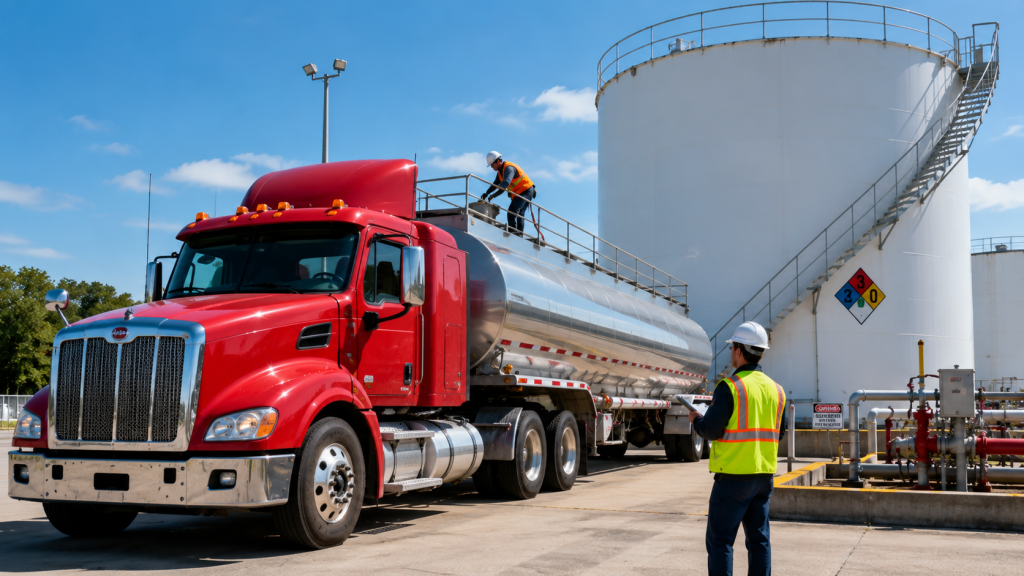
Red commercial tanker truck undergoing storage tank inspection at Red Rock Garage in St. George, Utah

What DOT Inspectors Are Actually Looking For

Before you can spot a problem, it helps to understand what a DOT inspector has on their checklist when it comes to fuel and storage tanks on commercial vehicles.

Under the Federal Motor Carrier Safety Administration (FMCSA) regulations, fuel tanks and cargo tanks are checked for structural integrity, secure mounting, proper venting, leak-free connections, and compliant valves and fittings. Inspectors look at the tank shell, welds, baffles, brackets, and all points where connections meet the tank.

What catches most operators off guard is that inspectors are not just looking for active leaks. A tank can be dry on the outside during inspection and still fail if the inspector finds corroded welds, a damaged baffle, a compromised valve housing, or a mounting bracket that is cracked or improperly secured. Compliance is about the entire system, not just whether fuel is dripping.

The most common inspection violations related to tanks include:

Leaking fuel tanks or fuel lines detected through staining or residue around fittings. Cracked or broken tank brackets and mounting hardware. Damaged or non-functioning shutoff valves. Corroded or thinned tank walls that don’t meet structural standards. Improper venting that creates pressure buildup risk.

Knowing these categories gives you a practical framework for your own pre-inspection walk-around.

The Warning Signs Your Storage Tank Needs Attention

Fuel Smell Without a Visible Leak

This is the one drivers tend to dismiss first. If you smell fuel inside the cab, around the tank housing, or when you walk the perimeter of your truck after parking, take it seriously. A faint fuel smell often means micro-seepage at a weld joint, a fitting that has worked itself loose, or a seal that is beginning to fail. These are not problems that seal themselves.

By the time a seep becomes a visible drip, the underlying damage has usually been progressing for a while. A certified technician using leak detection equipment can locate the source before it becomes a full repair or a DOT violation.

Visible Staining or Discoloration Around the Tank

Look at the exterior of your fuel or storage tank closely during your pre-trip inspection. Streaks, staining, or a chalky residue running down from fittings, seams, or the tank shell itself are signs that liquid has been migrating out of the tank, even if it dried before you saw it happen.

On aluminum tanks, look for white oxidation streaks. On steel tanks, rust streaking combined with wet or damp patches around welds is a common indicator of slow corrosion-driven seepage. Neither of these conditions resolves without physical storage tank repair.

Dents, Impact Damage, or Warping

Tanks take road debris hits, loading dock bumps, and occasional contact with terrain, especially on routes through Southern Utah where road conditions and narrow desert service roads can create hazards. A dent that looks minor on the outside can compromise the structural integrity of the tank wall, stress a weld seam, or shift the alignment of a bracket.

Warped or deformed sections of a tank shell should never be written off as cosmetic. A deformation that puts uneven stress on a weld line creates a failure point that can open up under pressure or vibration on the highway. If you see it, get it assessed.

Bracket and Mounting Hardware Issues

Tank straps, mounting brackets, and support hardware take a constant beating from road vibration. Over time, metal fatigues, welds crack, and bolts work loose. If your tank moves or shifts even slightly when you push against it with your hand, or if you can see visible movement in the hardware, that is a mounting issue that will flag immediately under DOT inspection.

Loose or cracked mounting hardware is also a safety issue beyond compliance. A tank that is not fully secured can shift under hard braking or in an accident in ways that create secondary failures in the fuel system.

Valve and Fitting Problems

The valves, fittings, and connection points on your storage tank are high-wear items. They open and close repeatedly, they are exposed to temperature cycling, and they are often the first points where a fuel storage tank starts to show wear.

Signs of valve problems include difficulty opening or closing shutoff valves, visible corrosion or mineral buildup around valve housings, fittings that feel loose or that have started to weep, and handles or actuators that don’t return to their proper position after operation. A malfunctioning shutoff valve is a straightforward DOT violation and a repair that can be completed quickly by a certified technician before your next inspection.

Internal Contamination Symptoms

This one is easy to overlook because it is not visible from outside the tank. If your fuel is showing contamination, if filters are clogging faster than normal, if there is water in your fuel separator more frequently than usual, or if your engine is running rough in ways that trace back to fuel quality, internal tank issues could be contributing.

Sediment buildup, internal corrosion, and residue accumulation inside a storage tank affect fuel quality and can eventually compromise the tank wall from the inside out. Internal cleaning and flushing services address this before it becomes a structural issue.

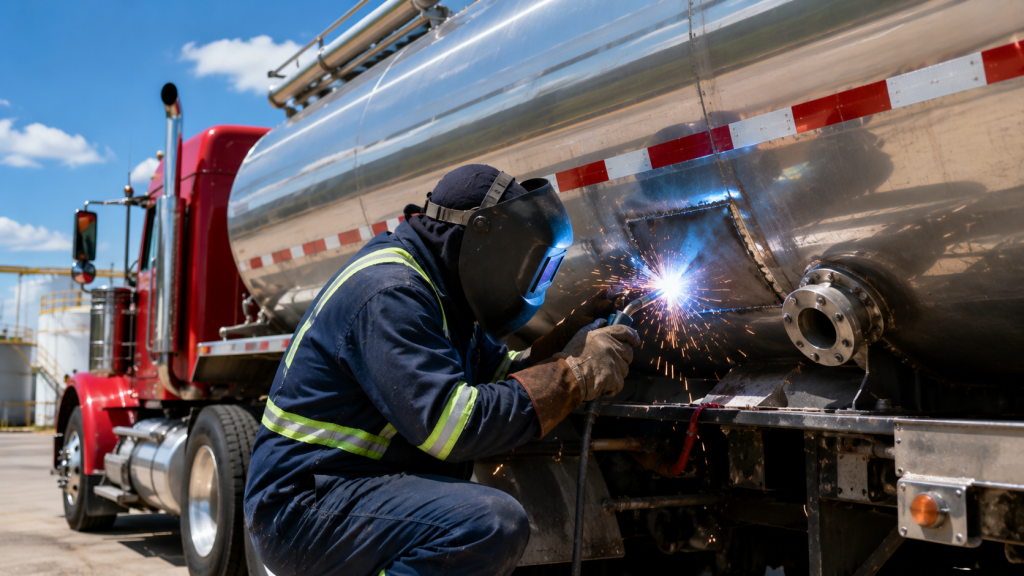
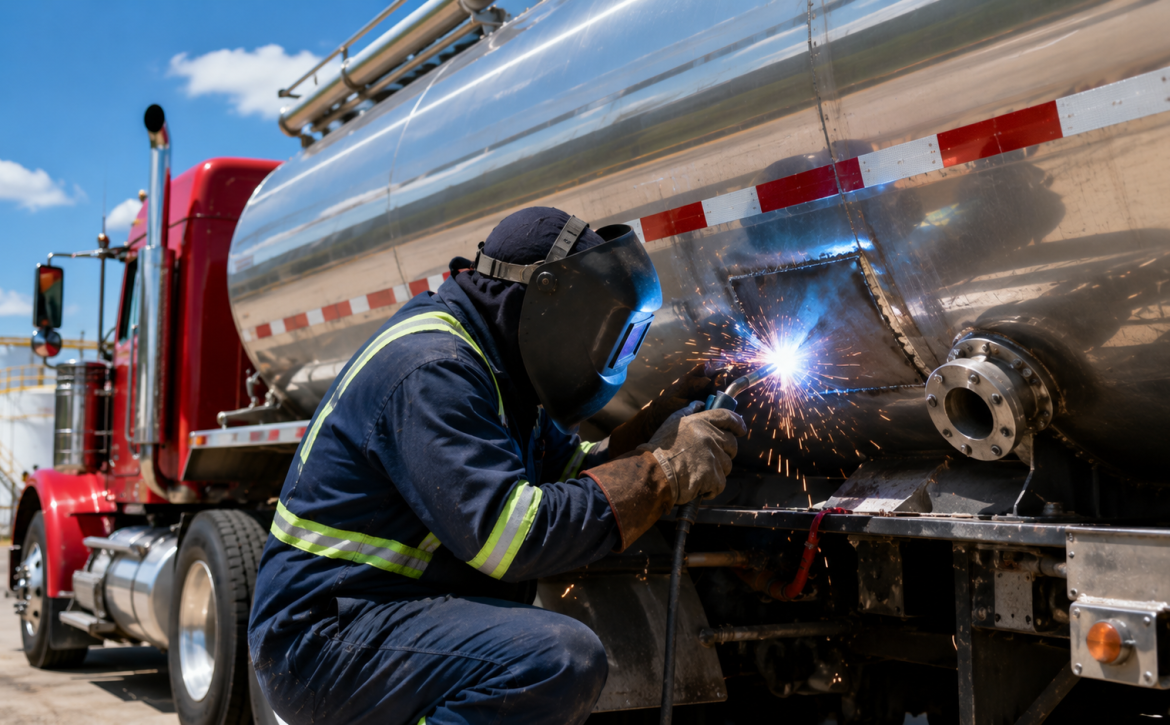
Certified technician performing storage tank repair welding on a commercial truck at Red Rock Garage, St. George UT

Why Pre-Trip Inspection Habits Are Your First Line of Defense

Federal regulations require commercial drivers to complete a pre-trip inspection before every trip. Most drivers check the obvious mechanical items but give the tank a quick visual at best. Building a proper tank check into your pre-trip routine takes less than five minutes and catches the majority of developing issues before they turn into repairs or violations.

Walk the full perimeter of the tank. Check fittings and valves by hand. Look for staining, damp patches, or anything that has changed since your last inspection. Smell matters too, as noted earlier. If something is different from yesterday, it warrants a closer look before you pull out.

Drivers who catch early-stage problems and report them to their fleet manager or shop immediately are the ones who avoid the bigger repair bills and the roadside inspection failures.

What Happens When a Tank Fails a DOT Inspection

A vehicle placed out of service for a tank violation cannot legally operate until the violation is corrected and reinspected. Depending on the severity of the issue, that can mean same-day repairs or an extended out-of-service order. Either way, the truck is not moving, freight is not delivered, and the cost of the repair is now compounded by lost revenue and schedule disruption.

Repeated violations create a compliance history that affects your CSA score. A high CSA score invites more frequent inspections, which creates a cycle that is expensive and operationally disruptive for fleet operators. The economics of preventative storage tank repair versus reactive repair after a failed inspection are not even close.

The Case for Scheduled Tank Inspections

Beyond pre-trip checks, commercial vehicles carrying fuel or liquid cargo benefit from periodic professional tank inspections separate from their regular service schedule. A certified technician can pressure-test the tank system, inspect weld integrity with more than a visual pass, check internal conditions, and verify that all valves and fittings meet current DOT standards.

For fleet operators based in St. George or routing trucks through Southern Utah, building this into your maintenance schedule means you are not finding out about a tank problem when a DOT inspector finds it for you on I-15 or at a weigh station.

Red Rock Garage has been certified in petroleum tank repair since 2005. The shop handles steel and aluminum tanks across commercial trucks, tankers, and RVs, covering everything from leak detection and welding repairs to internal cleaning, valve replacement, and full DOT compliance inspections. The work is done by experienced technicians who work on these systems regularly, not occasionally.

Repair Options: What Actually Gets Done

When a tank issue is identified, the repair scope depends on what is found. Common storage tank repair work includes:

Weld repairs on cracked or compromised seam welds using appropriate techniques for the tank material. Fabrication work for sections of the tank shell that have corroded past the point of simple repair. Bracket and mounting hardware replacement, including full re-fabrication when the original hardware is structurally compromised. Valve and fitting replacement, including shutoff valves, vents, and connection fittings that no longer meet spec. Internal cleaning and flushing for tanks with sediment buildup or contamination. Complete DOT compliance inspection and documentation after repairs are completed.

A reputable shop will document the work performed and confirm the tank meets regulatory standards before the vehicle goes back on the road. That documentation matters if the vehicle is inspected again soon after repairs.

Timing Your Repairs Around Your Schedule

One of the practical concerns fleet operators raise is timing. Trucks have loads to move and schedules to meet. The answer here is straightforward: a tank repair scheduled on your terms, during a planned maintenance window, will almost always take less time and cost less than an emergency repair following a roadside inspection or breakdown.

Red Rock Garage operates on a first-come, first-served basis with no appointment required, which means you can bring a vehicle in when a scheduling gap allows rather than waiting for a booked slot weeks out. For urgent issues, the shop also provides mobile repair services and 24-hour roadside assistance for situations where a problem develops away from the shop.

If your truck is running routes through St. George, the shop at 4204 S River Rd is positioned directly off the main commercial corridor and accessible for both local fleet vehicles and long-haul trucks passing through.

Final Thoughts

The gap between a developing tank problem and a DOT inspection failure is often smaller than operators expect. The warning signs covered here, fuel smell, staining, impact damage, mounting hardware wear, valve issues, and internal contamination, are all things you can identify during regular pre-trip checks or a professional inspection well before they become compliance violations.

Getting ahead of storage tank repair is not just about passing inspections. It is about keeping your trucks on the road, your loads on time, and your CSA score clean. For fleet operators in Southern Utah, that means having a certified shop you can rely on when the work needs to be done right.

Explore our tank repair, maintenance, and inspection services for fuel storage tanks, tanker trucks, commercial vehicles, and more, or call us at (435) 688-1130 to speak with a certified technician about your tank and get it road-ready before your next DOT inspection.

Generated by pixel @ 2025-12-29T18:35:37.972921

Semi Truck Services That Pay for Themselves (And the Ones That Don’t)

You need to regularly check and change your car’s oil to ensure smooth running of the vehicle and to prolong the lifespan of its engine. Changing your car’s oil is one of the most fundamental skills…

Call Red Rock Garage