If you run a commercial truck, tanker, or any vehicle carrying fuel or liquid cargo, your storage tank is one of the most inspected components on the road. DOT inspectors don’t give second chances on tank integrity. A failed inspection doesn’t just mean paperwork trouble; it means your truck is parked, your load isn’t moving, and your schedule is blown.
The frustrating part is that most storage tank failures that show up during DOT inspections didn’t appear overnight. The signs were there weeks or months earlier. Drivers and fleet managers either didn’t know what to look for or assumed a small issue could wait. It usually can’t.
This guide walks you through the real warning signs that your fuel storage tank needs repair, what inspectors actually check, and why catching problems early in St. George or anywhere along the I-15 corridor saves you far more than the cost of the repair itself.
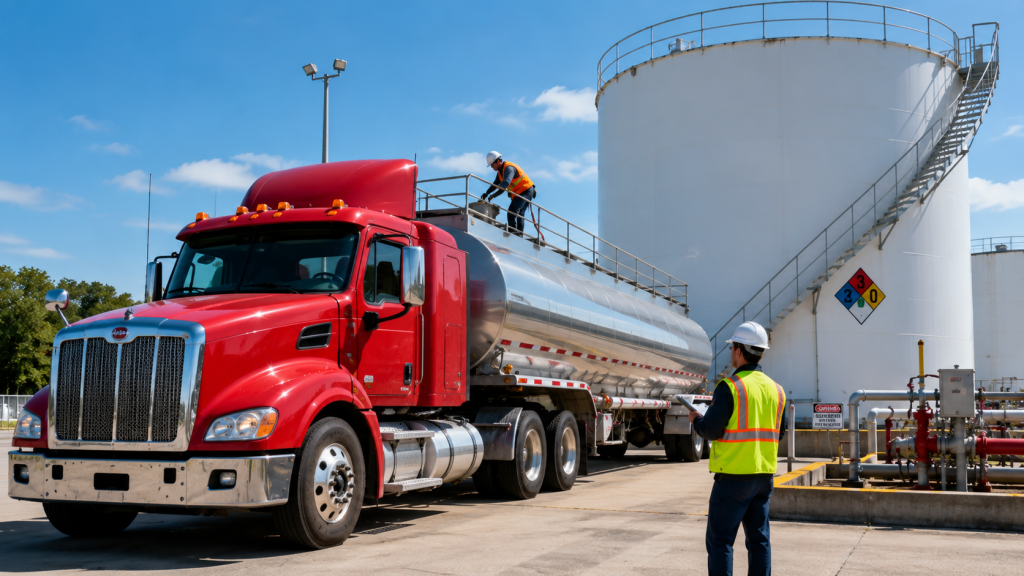
What DOT Inspectors Are Actually Looking For
Before you can spot a problem, it helps to understand what a DOT inspector has on their checklist when it comes to fuel and storage tanks on commercial vehicles.
Under the Federal Motor Carrier Safety Administration (FMCSA) regulations, fuel tanks and cargo tanks are checked for structural integrity, secure mounting, proper venting, leak-free connections, and compliant valves and fittings. Inspectors look at the tank shell, welds, baffles, brackets, and all points where connections meet the tank.
What catches most operators off guard is that inspectors are not just looking for active leaks. A tank can be dry on the outside during inspection and still fail if the inspector finds corroded welds, a damaged baffle, a compromised valve housing, or a mounting bracket that is cracked or improperly secured. Compliance is about the entire system, not just whether fuel is dripping.
The most common inspection violations related to tanks include:
Leaking fuel tanks or fuel lines detected through staining or residue around fittings. Cracked or broken tank brackets and mounting hardware. Damaged or non-functioning shutoff valves. Corroded or thinned tank walls that don’t meet structural standards. Improper venting that creates pressure buildup risk.
Knowing these categories gives you a practical framework for your own pre-inspection walk-around.
The Warning Signs Your Storage Tank Needs Attention
Fuel Smell Without a Visible Leak
This is the one drivers tend to dismiss first. If you smell fuel inside the cab, around the tank housing, or when you walk the perimeter of your truck after parking, take it seriously. A faint fuel smell often means micro-seepage at a weld joint, a fitting that has worked itself loose, or a seal that is beginning to fail. These are not problems that seal themselves.
By the time a seep becomes a visible drip, the underlying damage has usually been progressing for a while. A certified technician using leak detection equipment can locate the source before it becomes a full repair or a DOT violation.
Visible Staining or Discoloration Around the Tank
Look at the exterior of your fuel or storage tank closely during your pre-trip inspection. Streaks, staining, or a chalky residue running down from fittings, seams, or the tank shell itself are signs that liquid has been migrating out of the tank, even if it dried before you saw it happen.
On aluminum tanks, look for white oxidation streaks. On steel tanks, rust streaking combined with wet or damp patches around welds is a common indicator of slow corrosion-driven seepage. Neither of these conditions resolves without physical storage tank repair.
Dents, Impact Damage, or Warping
Tanks take road debris hits, loading dock bumps, and occasional contact with terrain, especially on routes through Southern Utah where road conditions and narrow desert service roads can create hazards. A dent that looks minor on the outside can compromise the structural integrity of the tank wall, stress a weld seam, or shift the alignment of a bracket.
Warped or deformed sections of a tank shell should never be written off as cosmetic. A deformation that puts uneven stress on a weld line creates a failure point that can open up under pressure or vibration on the highway. If you see it, get it assessed.
Bracket and Mounting Hardware Issues
Tank straps, mounting brackets, and support hardware take a constant beating from road vibration. Over time, metal fatigues, welds crack, and bolts work loose. If your tank moves or shifts even slightly when you push against it with your hand, or if you can see visible movement in the hardware, that is a mounting issue that will flag immediately under DOT inspection.
Loose or cracked mounting hardware is also a safety issue beyond compliance. A tank that is not fully secured can shift under hard braking or in an accident in ways that create secondary failures in the fuel system.
Valve and Fitting Problems
The valves, fittings, and connection points on your storage tank are high-wear items. They open and close repeatedly, they are exposed to temperature cycling, and they are often the first points where a fuel storage tank starts to show wear.
Signs of valve problems include difficulty opening or closing shutoff valves, visible corrosion or mineral buildup around valve housings, fittings that feel loose or that have started to weep, and handles or actuators that don’t return to their proper position after operation. A malfunctioning shutoff valve is a straightforward DOT violation and a repair that can be completed quickly by a certified technician before your next inspection.
Internal Contamination Symptoms
This one is easy to overlook because it is not visible from outside the tank. If your fuel is showing contamination, if filters are clogging faster than normal, if there is water in your fuel separator more frequently than usual, or if your engine is running rough in ways that trace back to fuel quality, internal tank issues could be contributing.
Sediment buildup, internal corrosion, and residue accumulation inside a storage tank affect fuel quality and can eventually compromise the tank wall from the inside out. Internal cleaning and flushing services address this before it becomes a structural issue.
Why Pre-Trip Inspection Habits Are Your First Line of Defense
Federal regulations require commercial drivers to complete a pre-trip inspection before every trip. Most drivers check the obvious mechanical items but give the tank a quick visual at best. Building a proper tank check into your pre-trip routine takes less than five minutes and catches the majority of developing issues before they turn into repairs or violations.
Walk the full perimeter of the tank. Check fittings and valves by hand. Look for staining, damp patches, or anything that has changed since your last inspection. Smell matters too, as noted earlier. If something is different from yesterday, it warrants a closer look before you pull out.
Drivers who catch early-stage problems and report them to their fleet manager or shop immediately are the ones who avoid the bigger repair bills and the roadside inspection failures.
What Happens When a Tank Fails a DOT Inspection
A vehicle placed out of service for a tank violation cannot legally operate until the violation is corrected and reinspected. Depending on the severity of the issue, that can mean same-day repairs or an extended out-of-service order. Either way, the truck is not moving, freight is not delivered, and the cost of the repair is now compounded by lost revenue and schedule disruption.
Repeated violations create a compliance history that affects your CSA score. A high CSA score invites more frequent inspections, which creates a cycle that is expensive and operationally disruptive for fleet operators. The economics of preventative storage tank repair versus reactive repair after a failed inspection are not even close.
The Case for Scheduled Tank Inspections
Beyond pre-trip checks, commercial vehicles carrying fuel or liquid cargo benefit from periodic professional tank inspections separate from their regular service schedule. A certified technician can pressure-test the tank system, inspect weld integrity with more than a visual pass, check internal conditions, and verify that all valves and fittings meet current DOT standards.
For fleet operators based in St. George or routing trucks through Southern Utah, building this into your maintenance schedule means you are not finding out about a tank problem when a DOT inspector finds it for you on I-15 or at a weigh station.
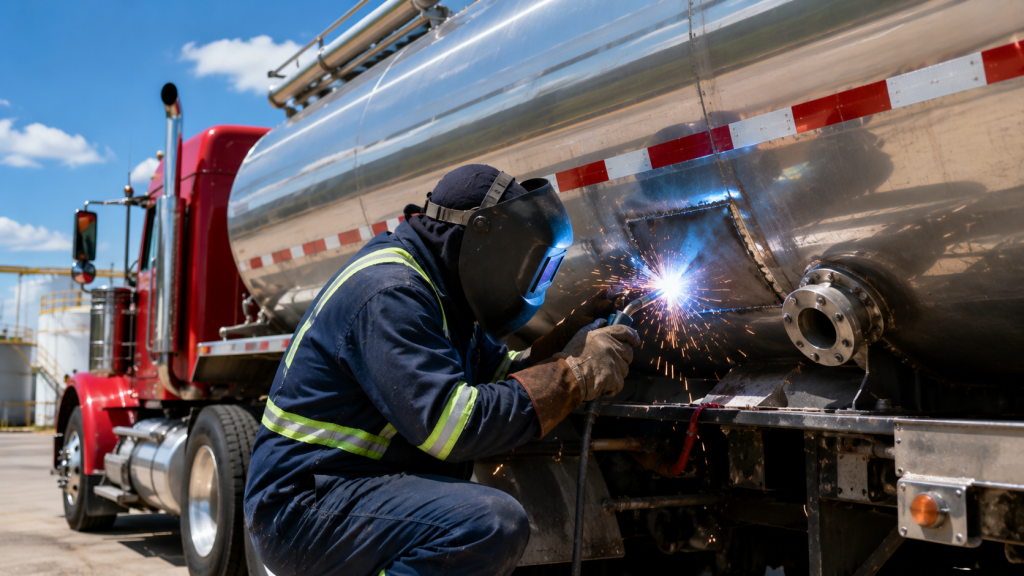
Red Rock Garage has been certified in petroleum tank repair since 2005. The shop handles steel and aluminum tanks across commercial trucks, tankers, and RVs, covering everything from leak detection and welding repairs to internal cleaning, valve replacement, and full DOT compliance inspections. The work is done by experienced technicians who work on these systems regularly, not occasionally.
Repair Options: What Actually Gets Done
When a tank issue is identified, the repair scope depends on what is found. Common storage tank repair work includes:
Weld repairs on cracked or compromised seam welds using appropriate techniques for the tank material. Fabrication work for sections of the tank shell that have corroded past the point of simple repair. Bracket and mounting hardware replacement, including full re-fabrication when the original hardware is structurally compromised. Valve and fitting replacement, including shutoff valves, vents, and connection fittings that no longer meet spec. Internal cleaning and flushing for tanks with sediment buildup or contamination. Complete DOT compliance inspection and documentation after repairs are completed.
A reputable shop will document the work performed and confirm the tank meets regulatory standards before the vehicle goes back on the road. That documentation matters if the vehicle is inspected again soon after repairs.
Timing Your Repairs Around Your Schedule
One of the practical concerns fleet operators raise is timing. Trucks have loads to move and schedules to meet. The answer here is straightforward: a tank repair scheduled on your terms, during a planned maintenance window, will almost always take less time and cost less than an emergency repair following a roadside inspection or breakdown.
Red Rock Garage operates on a first-come, first-served basis with no appointment required, which means you can bring a vehicle in when a scheduling gap allows rather than waiting for a booked slot weeks out. For urgent issues, the shop also provides mobile repair services and 24-hour roadside assistance for situations where a problem develops away from the shop.
If your truck is running routes through St. George, the shop at 4204 S River Rd is positioned directly off the main commercial corridor and accessible for both local fleet vehicles and long-haul trucks passing through.
Final Thoughts
The gap between a developing tank problem and a DOT inspection failure is often smaller than operators expect. The warning signs covered here, fuel smell, staining, impact damage, mounting hardware wear, valve issues, and internal contamination, are all things you can identify during regular pre-trip checks or a professional inspection well before they become compliance violations.
Getting ahead of storage tank repair is not just about passing inspections. It is about keeping your trucks on the road, your loads on time, and your CSA score clean. For fleet operators in Southern Utah, that means having a certified shop you can rely on when the work needs to be done right.
Explore our tank repair, maintenance, and inspection services for fuel storage tanks, tanker trucks, commercial vehicles, and more, or call us at (435) 688-1130 to speak with a certified technician about your tank and get it road-ready before your next DOT inspection.