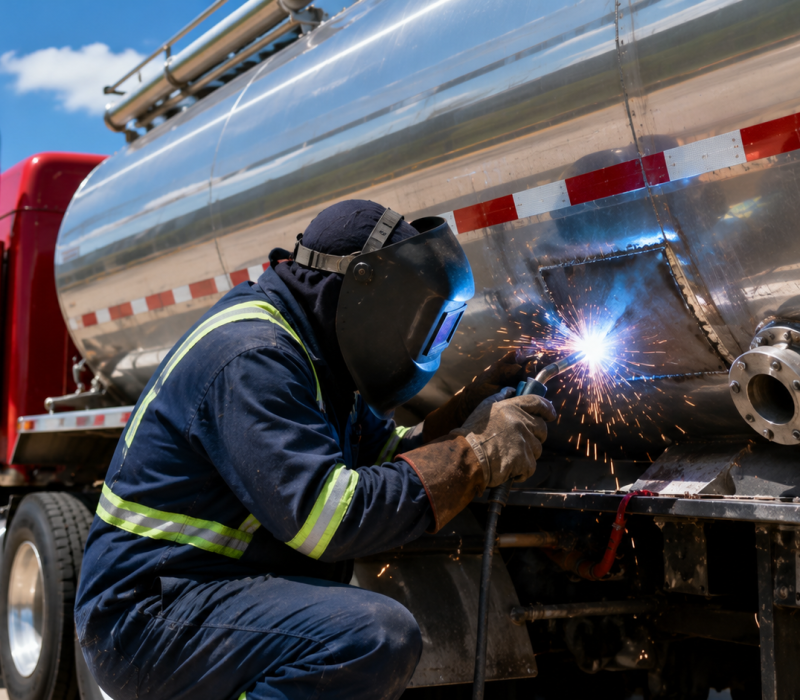
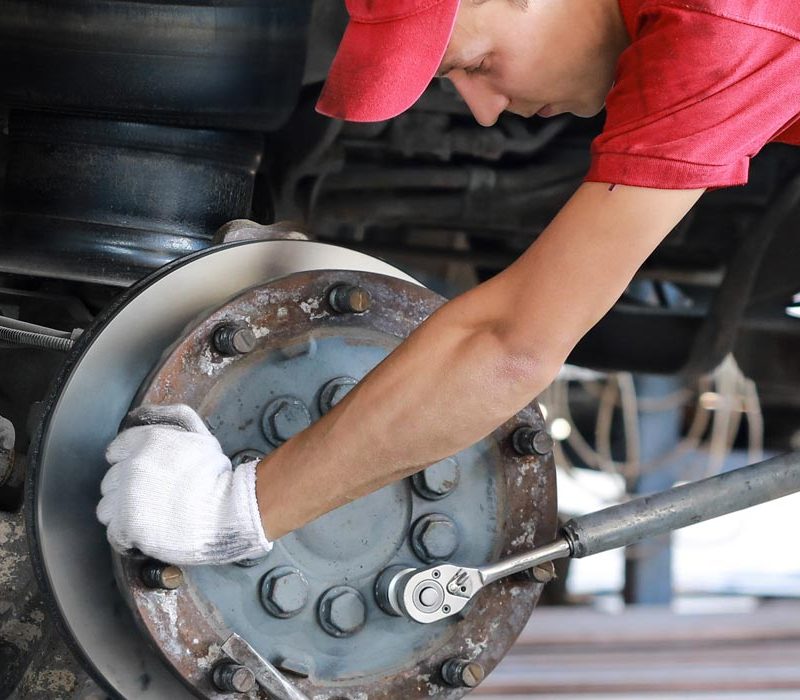
Semi Truck Services That Pay for Themselves (And the Ones That Don’t)
Every owner-operator knows the math problem that keeps them up at night: spend $15,000 on maintenance this year, or risk a $10,000 engine overhaul next month. The difference between semi truck services that make you money and ones that drain your wallet isn’t always obvious when you’re staring at a service quote.
I’ve watched drivers make both choices. The smart ones understand that not all preventive maintenance is created equal, and some “necessary” services are just expensive insurance policies you’ll never use.
The Real Cost of Semi Truck Services
Before we talk about what works, let’s establish the baseline. According to industry data, the average semi truck maintenance program costs between $10,000 and $15,000 annually. That breaks down to roughly 13-16 cents per mile for owner-operators running 100,000 miles per year.
But here’s where it gets interesting: optimized maintenance programs drop that number to 12-16 cents per mile while reducing downtime from 15-20% to under 5%. The difference isn’t newer trucks or better luck. It’s knowing which services actually prevent problems and which ones just pad someone’s bottom line.
Semi Truck Services That Actually Pay for Themselves
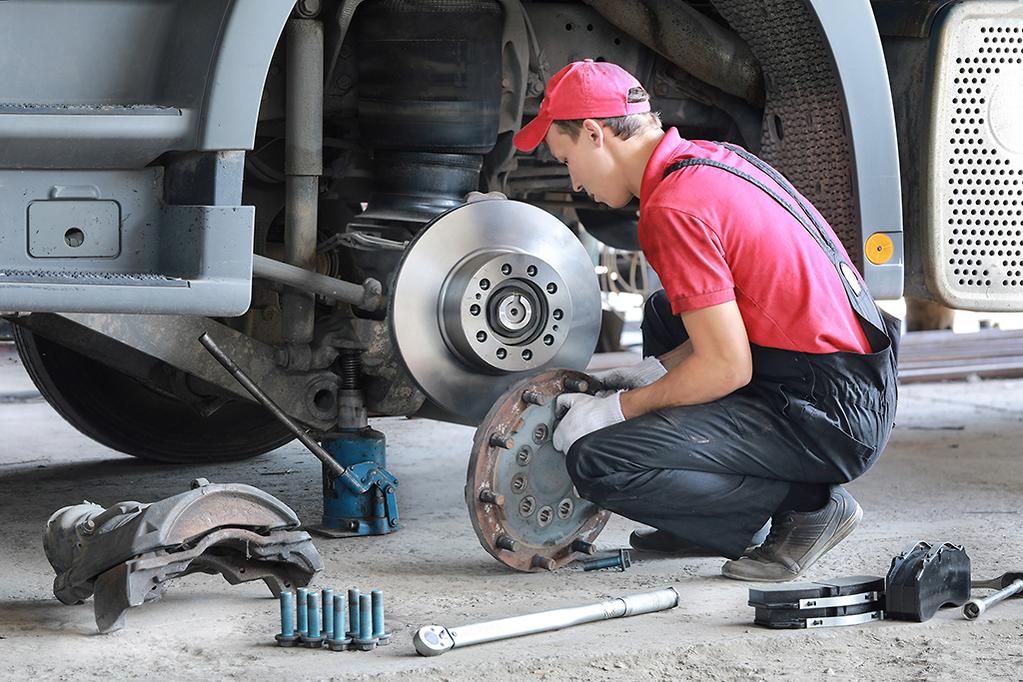
Brake Inspections (Every 10,000-15,000 Miles)
A brake system overhaul costs upward of $2,000. A thorough brake inspection runs about $100-150 when bundled with routine service. The math is straightforward, but the real payoff goes beyond preventing that $2,000 repair.
Failed brakes put you out of service at a DOT checkpoint, and that costs you a full day of revenue plus towing fees that can hit $500-800. Worse, brake-related violations stay on your CSA scores and affect your insurance rates for three years.
Semi truck brake services should include checking air pressure build time (should reach 85-100 psi in under 40 seconds), inspecting slack adjusters, examining brake pad thickness, and testing all brake chambers. If your shop isn’t doing all of this, you’re getting a visual check that misses the failures that matter.
The inspection interval matters less than the conditions you’re running. Hauling heavy loads through mountain grades? Inspect every 10,000 miles minimum. Running light freight on flat terrain? You can stretch to 15,000.
Oil Changes at Manufacturer Intervals (Not Before)
This is where drivers throw away money. A full PM-B service with oil change costs around $300. If you’re changing oil every 15,000 miles when your newer truck can safely run 50,000 miles between changes, you’re spending $1,200 extra per year for absolutely no benefit.
Modern diesel engines with synthetic oil don’t need 15,000-mile oil changes anymore. Check your actual manufacturer specifications, not what the truck stop sign says. The caveat: this only applies if you’re using the correct oil grade and your engine isn’t showing signs of excessive blow-by.
Oil analysis costs about $30 and tells you exactly when your oil needs changing based on your specific operating conditions. Run it once to establish your baseline, then follow manufacturer intervals with confidence.
DOT Annual Inspections (Smart Timing)
The annual DOT inspection costs $50-125 for the truck and $40-75 for the trailer. It’s legally required, so there’s no avoiding it. But here’s the trick: if you pass a Level 1 roadside inspection, that counts as your annual.
Some carriers offer quarterly DOT inspections at no cost if you’re leased to them. That’s four chances per year to have your annual requirement covered while catching issues before they become violations. The inspection itself doesn’t pay for itself, but strategic timing prevents the $200+ citation for operating without proof of periodic inspection, the second most common FMCSA violation.
Computer Diagnostics for Check Engine Lights
A diagnostic scan costs $75-150. Ignoring a check engine light until it becomes a performance problem can cost you anywhere from $1,000 for a sensor replacement to $10,000+ for engine damage.
The real value in diagnostic services comes from catching issues in their early stages. A failing EGR valve caught early costs $400-600 to replace. Wait until it damages your turbo, and you’re looking at $3,000-5,000.

Tire Pressure Monitoring and Regular Rotations
Under-inflated tires kill fuel economy and cause premature tread wear. Over-inflated tires blow out and create emergency service calls. A tire pressure check during routine service costs nothing extra, but it prevents problems that cost real money.
Premium semi truck tires run $250-1,000 each. Replacing all 18 tires at once costs $4,500-18,000 depending on what you’re running. Proper inflation and regular rotation extends tire life by up to 30%, and the service is typically included in your routine maintenance.
The fuel economy impact matters more than most drivers realize. Running 10 psi low across your drive tires costs you 0.5-1% in fuel efficiency. At $3.50 per gallon and 100,000 miles per year at 6 mpg, that’s $300-600 per year in wasted diesel just from tire pressure.
The Semi Truck Services That Rarely Pay Off
Fuel System Cleaners and Additives
Every truck stop sells fuel additives promising better mileage, cleaner injectors, and improved performance. The bottles cost $15-40, and if you’re using them regularly, you’re spending $200-500 per year.
Modern ultra-low sulfur diesel already contains detergents. Your fuel filters are designed to remove contaminants. Unless you’re consistently buying fuel from questionable sources or your fuel filter is showing unusual contamination, additives are solving a problem you don’t have.
The exception: winter anti-gel additives in cold climates. That’s legitimate problem prevention. Everything else is expensive peace of mind.
Extended Warranties on New Parts
When you’re replacing a $600 alternator, the shop offers a 3-year warranty for an extra $120. It sounds reasonable until you realize alternators rarely fail within three years, and if they do, it’s usually from installation error covered under the basic warranty anyway.
Extended warranties on parts make money for the service shop, not for you. The failure rates don’t justify the premium, and you’re betting against statistics that favor the house.
Coolant System Flushes (On a Fixed Schedule)
Annual coolant flushes sound like good preventive maintenance. They cost $150-250, and many shops recommend them like clockwork. The reality: modern coolant formulations last 150,000-300,000 miles or 3-6 years depending on type.
Flushing perfectly good coolant accomplishes nothing except draining your maintenance budget. Test your coolant with a $15 test strip kit. When the inhibitors are depleted, flush the system. Until then, save your money.
The same logic applies to transmission fluid, differential fluid, and power steering fluid. These aren’t time-based services. They’re condition-based, and the condition testing is cheap.
Frequent Air Filter Replacements
Air filters cost $50-150 depending on your setup. Some shops recommend replacement at every oil change. That’s absurd unless you’re running in extremely dusty conditions.
A quality air filter lasts 30,000-50,000 miles in normal conditions. You can inspect it yourself in 30 seconds. Pull it out, hold it up to light. If light passes through, it’s fine. If it’s clogged with dirt that blocks light, replace it.
Replacing a good air filter early doesn’t help anything. It just means you’re buying more air filters than necessary.
When “Preventive” Becomes Expensive
The preventive maintenance trap works like this: a service shop recommends replacing a part that “might” fail soon. Maybe it’s a belt that looks cracked but isn’t actually failing. Maybe it’s a hose that feels soft but isn’t leaking.
This is where experience with your specific truck matters more than generic service intervals. A belt that looks cracked might have 20,000 miles left. Or it might fail in 200 miles. The shop doesn’t know, and they’re not liable if you decline the service and it fails later.
The balance comes down to risk tolerance and downtime costs. If you’re running dedicated lanes with tight schedules, replacing questionable parts makes sense. If you have flexibility and access to good roadside service, running parts until they actually fail can save thousands per year.
The Services You Can’t Skip
Some semi truck services aren’t negotiable, regardless of whether they “pay for themselves” in traditional terms:
Safety-critical brake services must be done on schedule. The cost of brake failure isn’t measured in repair bills. It’s measured in lives and livelihoods.
DOT compliance inspections keep you legal. The citation costs more than the service, and an out-of-service order costs you a full day’s revenue minimum.
Manufacturer warranty requirements must be followed to the letter if you want coverage. Skip a required service to save $300, void a $5,000 warranty claim. Bad math.
Smart Semi Truck Service Scheduling
The real money in maintenance comes from optimizing your service intervals based on actual operating conditions, not generic recommendations.
Track your maintenance in detail. Every service, every repair, every part replacement. After a year, patterns emerge. You’ll see which services prevented problems and which ones were wasted money. Adjust accordingly.
Consider your total operating costs, not just the service invoice. A $500 service that prevents three days of downtime saves you $1,500 in lost revenue (at $500 per day). That’s a 300% return. A $200 service that accomplishes nothing is a 100% loss.
Build relationships with quality service providers who understand your operation. The shop that knows you’re running heavy loads through mountain terrain will give you different recommendations than the shop treating you like every other truck that comes through.
The Bottom Line on Semi Truck Services
Preventive maintenance delivers 300-500% ROI when done right. The key phrase is “when done right.” That means spending money on services that actually prevent failures, not on services that prevent imaginary problems or pad service department profits.
Your maintenance budget should focus on three categories: safety-critical systems that can’t fail, compliance requirements that keep you legal, and high-failure components specific to your operation and conditions.
Everything else is optional, and optional services should prove their value. If you can’t point to a specific problem the service prevents or a specific regulation it satisfies, question whether you need it.
The best semi truck services are the ones you never think about because they prevented problems before they happened. The worst ones are the expensive lessons that teach you which corners you can’t cut. Learn the difference, and your maintenance budget becomes an investment instead of an expense.
Looking for semi truck services that actually deliver value? Explore our semi truck repair services where we focus on preventive maintenance that prevents real problems, not imaginary ones. Call us at (435) 688-1130 to discuss a maintenance program built around your actual operating conditions, not generic service intervals that waste your money.