How Often Should Tires Be Rotated? A 5-Step Tire Service Guide
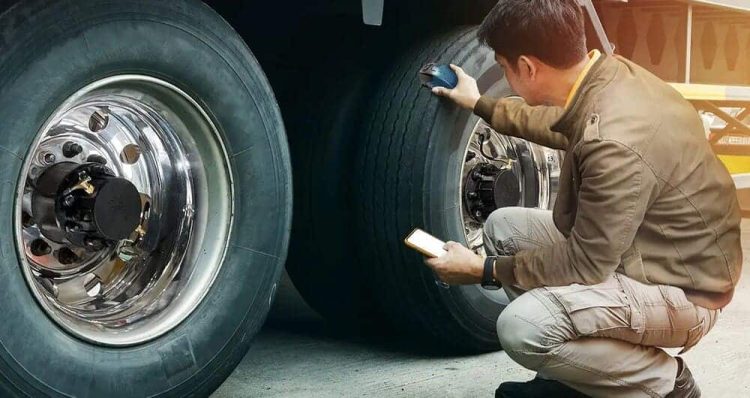
Most drivers know tire rotation is something they’re supposed to do. Few actually know why it matters, how often it needs to happen, or what skipping it costs them in the long run. If you’re running a personal vehicle, an RV, or a commercial truck through Southern Utah, this guide covers everything you need to know about tire rotation and tire service without wasting your time.
Why Tire Rotation Matters More Than Most People Realize
Tires don’t wear evenly. That’s not a flaw in the design, it’s just physics. The front tires on most vehicles carry the weight of the engine, handle steering, and absorb braking force all at once. The rear tires mostly just roll. Over time, that imbalance creates a situation where your front tires are significantly more worn than your rears, even if they were all installed at the same time.
Left unchecked, uneven wear shortens the lifespan of your tires considerably. Instead of getting 50,000 to 70,000 miles out of a quality set, you might be replacing your front tires at 30,000 while your rears still have plenty of life left. That’s money out of your pocket for no good reason.
Regular tire rotation fixes this by moving each tire to a different position on the vehicle so the wear distributes more evenly across all four. It sounds simple because it is. But the compounding effect of doing it consistently adds up to thousands of dollars in savings over the life of a vehicle.
For commercial trucks and fleet vehicles, the stakes are even higher. Uneven tire wear on a semi can affect handling, fuel efficiency, and DOT compliance. Tire service for heavy-duty vehicles isn’t just about saving money, it’s about keeping drivers safe and keeping trucks on the road.
Step 1: Know How Often Your Tires Should Be Rotated
The most common recommendation is every 5,000 to 7,500 miles for passenger vehicles. Many shops suggest doing it at every oil change if you’re on a 5,000-mile oil change schedule, which makes it easy to remember and keeps your tire service consistent.
That said, the right interval depends on a few variables:
Your vehicle type matters. Front-wheel drive vehicles tend to wear front tires faster than rear-wheel drive or all-wheel drive vehicles because the front tires handle both driving and steering. If you’re driving a front-wheel drive car or truck, staying closer to the 5,000-mile mark is smarter than pushing it to 7,500.
Your load matters. If you’re regularly hauling heavy loads, towing a trailer, or running a work truck that carries equipment, your tires are working harder than those on a lightly loaded passenger car. Under those conditions, rotating more frequently is the right call.
Your driving conditions matter. Highway miles are generally easier on tires than city driving with constant starts and stops. If you’re doing a lot of stop-and-go driving in St. George or putting on highway miles between cities, that context changes your ideal rotation schedule.
For semi-trucks and commercial vehicles, tire rotation schedules are typically tied to preventive maintenance intervals set by fleet managers or manufacturers. Following those intervals and keeping detailed service records is part of staying DOT compliant and avoiding headaches during inspections.
The bottom line on Step 1: if you don’t know when your tires were last rotated, schedule tire service now and reset the clock.
Step 2: Learn the Rotation Patterns That Actually Apply to Your Vehicle
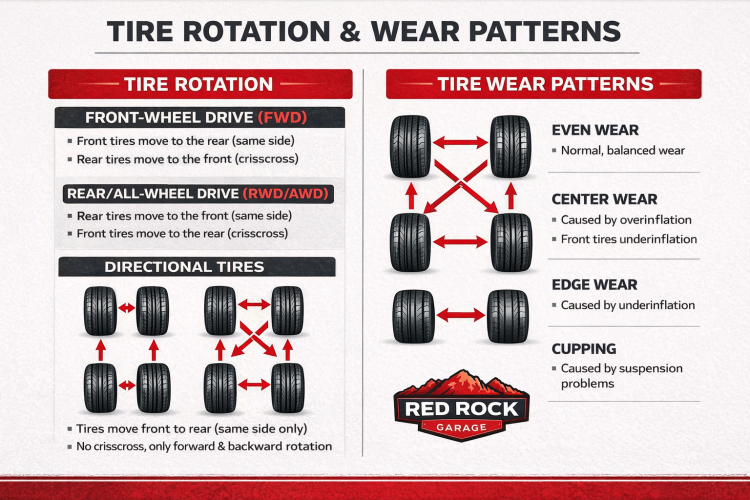
Not every tire rotation looks the same. The pattern used depends on your vehicle’s drivetrain and whether you have a full-size spare that can be included in the rotation.
The forward cross pattern is common on front-wheel drive vehicles. The front tires move straight back to the rear, and the rear tires cross to the opposite side of the front. This accounts for the heavier wear on the front axle.
The rearward cross pattern is used on rear-wheel drive and four-wheel drive vehicles. The rear tires move straight forward, and the front tires cross to the opposite side of the rear axle.
The X-pattern moves all four tires diagonally and is sometimes used when wear needs to be equalized more aggressively, particularly on vehicles where the tires have already developed some uneven wear.
If your vehicle has a matching full-size spare, a five-tire rotation can be done, which extends the life of all five tires equally and means your spare is always in rotation and ready if you need it.
For trucks with dual rear wheels, also called duallies, the rotation pattern is more involved and requires a shop with the right equipment and experience handling commercial vehicles.
Understanding the correct pattern matters because doing a rotation with the wrong pattern can actually make uneven wear worse. This is one reason tire service is worth leaving to a shop that knows what they’re doing rather than guessing in the driveway.
Step 3: Watch for the Signs That Rotation Is Overdue
Sometimes life gets busy and the mileage interval slips by without you realizing it. Your tires will usually let you know if rotation is overdue, but only if you know what to look for.
Vibration in the steering wheel or through the floorboard is one of the clearest signs. When tires wear unevenly, they stop rolling smoothly and that vibration travels through the vehicle. Some people chalk this up to road conditions or alignment, but if it’s persistent, tire service should be your first stop.
Visible differences in tread depth between your front and rear tires is another obvious sign. If you squat down and look at your tires and the fronts look noticeably more worn than the rears, rotation is long overdue.
Cupping or scalloping along the tread is a pattern that looks like the tire has small dips or cups across its surface. This is typically caused by uneven wear combined with suspension issues and gets worse the longer it’s ignored.
Pulling to one side while driving straight can sometimes indicate uneven wear, though it can also point to alignment issues. Either way, a tire inspection should be part of the diagnosis.
Increased road noise is something a lot of drivers notice but don’t immediately connect to their tires. As tread wears unevenly, the noise profile of the tire changes and can become noticeably louder, especially on smooth highway surfaces.
If you’re noticing any of these warning signs, the answer isn’t just rotation. At that point, a full tire inspection is needed to assess whether rotation can still correct the wear pattern or whether replacement is the smarter move.
Step 4: Pair Tire Rotation With These Other Tire Service Checks
Rotation done in isolation misses an opportunity. Any time tires come off a vehicle, a qualified technician should be checking several other things at the same time.
Tire pressure should be checked and adjusted at every rotation. Proper inflation affects how evenly a tire wears and has a direct impact on fuel economy. Under-inflated tires wear faster on the outer edges. Over-inflated tires wear faster in the center. Both conditions shorten tire life and affect handling.
Tread depth should be measured at every visit. Most tires come with 10/32 to 11/32 inches of tread. The legal minimum in most states is 2/32, but handling and wet-weather traction start degrading well before you hit the legal limit. Knowing where you stand gives you time to plan for replacement instead of being forced into it unexpectedly.
Wheel balancing should be considered alongside rotation. Balancing ensures that the weight of the tire and wheel assembly is distributed evenly around the axle. An out-of-balance tire causes vibration and accelerates wear in specific spots. If it’s been a while since your wheels were balanced, doing it at the same time as a rotation is efficient and cost-effective.
Alignment should be checked periodically as well, even if it doesn’t need to happen every single rotation. Misalignment is one of the leading causes of premature and uneven tire wear. If your vehicle is pulling to one side or if your tires are wearing faster on one edge, alignment is likely part of the problem.
Brake inspection is another item that makes sense to check while the tires are off. It costs nothing extra in labor and gives you a complete picture of what’s happening at each wheel.
Step 5: Build a Tire Service Schedule You’ll Actually Stick To
The biggest reason tire rotation gets skipped isn’t that drivers don’t care about their tires. It’s that without a system, it’s easy to forget. A few habits make it easy to stay consistent.
Tie rotation to oil changes. If you change your oil every 5,000 miles, rotation at the same time requires no extra planning. You’re already at the shop, the vehicle is already being serviced, and adding a rotation adds minimal time and cost.
Keep a simple log. Whether it’s a note in your glove box or an entry in a fleet maintenance app, writing down the date and mileage of your last rotation takes 30 seconds and removes all the guesswork.
Set a calendar reminder. If you don’t track mileage closely, a reminder every three to four months works reasonably well for most drivers with average annual mileage.
For fleet managers, building tire rotation into a formal preventive maintenance schedule is non-negotiable. The cost of a blown tire on the road, including downtime, towing, and emergency service, is dramatically higher than the cost of a rotation done on schedule. The math is obvious.
For commercial truck operators, staying on top of tire service also keeps you compliant during DOT inspections. Inspectors check tire condition, tread depth, and inflation. Showing up with uneven wear or low tread because rotation was neglected is an avoidable problem.
What Happens When You Ignore Tire Rotation Entirely
This section exists because some drivers genuinely wonder if rotation is optional or if it’s just something shops recommend to generate business. It is not optional if you care about getting full value out of your tires.
Tires that are never rotated typically wear out 25 to 30 percent faster than tires that are rotated on schedule. On a set of tires that cost $800 to $1,200, that’s a significant loss. Multiply that across a fleet of vehicles and the number becomes substantial.
Beyond cost, severely worn tires are a safety issue. A tire with low tread depth has reduced traction in rain, longer stopping distances, and higher blowout risk. In Southern Utah where summer temperatures regularly push asphalt surface temperatures above 150 degrees, the stress on tires is already higher than in cooler climates. Hot pavement accelerates wear and increases blowout risk, particularly on tires that are already unevenly worn.
For anyone running a commercial truck or RV through the region, this isn’t abstract. Interstate 15 through St. George sees heavy truck traffic year-round and the combination of heat, load, and distance makes tire condition a genuine safety consideration, not just a maintenance checkbox.
The Short Version
Rotate your tires every 5,000 to 7,500 miles for passenger vehicles, more frequently if you’re hauling heavy loads or running commercial equipment. Use the correct rotation pattern for your drivetrain. Watch for vibration, uneven wear, and road noise as early warning signs. Pair rotation with pressure checks, tread depth measurements, balancing, and periodic alignment. Build a schedule and stick to it.
That’s the whole job. It’s not complicated, but it does require consistency.
If you’re in St. George or passing through Southern Utah and your tires are due for service, explore our tire service for a full list of what we offer, or call us at (435) 688-1130 to speak with a technician directly. We work on everything from passenger cars to semi-trucks and RVs, with no appointment necessary and mobile service available if you’re stranded on the road.